
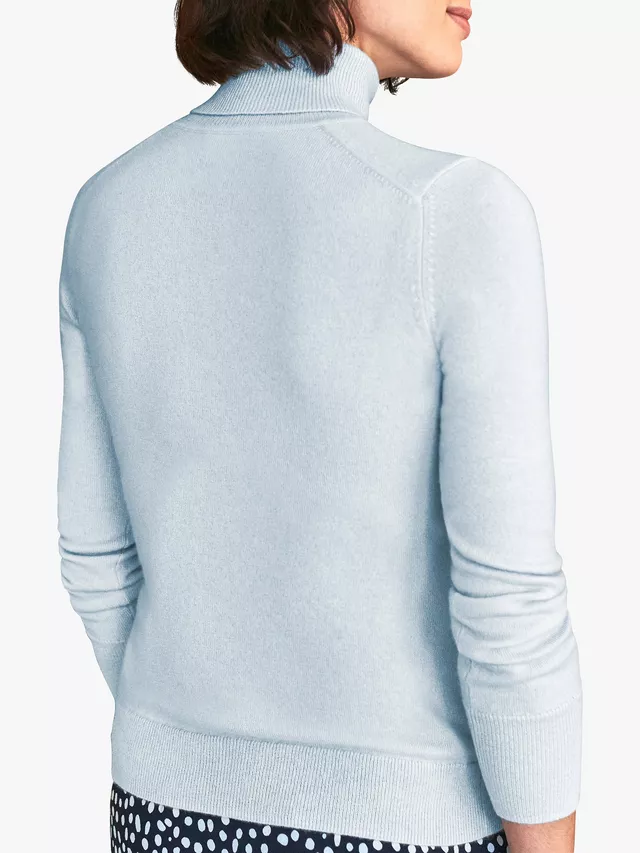
John Lewis’s public product pages can give UK shoppers a practical set of checks before buying clothing: price, colour, size controls, stock wording, collection options, delivery and returns. The evidence here is narrower than a full fashion-department review, so the useful question is what a shopper can verify on the page, what still needs checking, and how to compare the total buying decision.
John Lewis Fashion at a Glance
This guide uses the official page for the Pure Collection Cashmere Roll Neck Jumper as its direct fashion example. It lists £150, marked online only, in Cloud Blue, with eight colour swatches, a size chart, product description and specification sections, delivery-and-returns information, and an add-to-basket control.
On the product page reviewed for this guide, sizes 10, 16, 18 and 20 are marked currently unavailable. The page says the item is not available in store, but offers collection from the nearest Waitrose from 3pm tomorrow, free Click & Collect, free standard delivery and free returns. These terms apply to this page and selected variant.
The page shows an average rating of 3.00 out of 5 from two reviews. That is a visible page-level signal, not proof of fit, fabric feel, warmth, construction or durability. This guide does not claim hands-on or independent product testing.
Adjacent official pages illustrate retailer context only. A £40 pillow page shows online stock, in-store stock checking, free Click & Collect, free returns, and free standard delivery over £50 otherwise from £4.50. A £40 vase page shows the same standard-delivery threshold. A LEGO page shows Click & Collect free over £40 otherwise £2.95, and standard delivery free over £50 otherwise £4.50. These differences support checking the exact item page rather than applying a universal rule.
Overall, the evidence supports reviewing page transparency and buying checks, not the breadth or performance of the whole fashion range.
Documented Range Strengths
The strongest documented feature is the amount of decision information placed around the product page. For the cashmere jumper, a shopper can see the displayed price, selected colour, alternative colour swatches, size chart, size-level availability, product description, specification, delivery and returns areas, and an add-to-basket control. That makes it possible to complete several pre-purchase checks without treating the product name or price as a substitute for detail.
Variant presentation is also clear in the supplied example. Eight colour swatches are listed, including Black, Cloud Blue, Camel, Lipstick, Blue, Duck Egg, Heather Pink and Wisteria. The page then attaches availability wording to individual sizes. That matters because a product can appear in a colour range while the particular size a shopper needs is unavailable.
The page also surfaces service choices before the basket: it says the jumper is not available in store, but offers Waitrose collection from 3pm tomorrow, free Click & Collect, free standard delivery and free returns. A shopper can therefore consider convenience and fulfilment alongside the garment itself.
Adjacent official pages show that John Lewis product presentation can include further buying signals such as online stock, in-store stock checking, review counts and, in some categories, guarantees or useful guides. The home-and-garden browse page also shows filters, sorting and product-level ratings in a listing context. These are useful examples of information presentation, not fashion-specific proof of fit or quality.
The practical strength is visibility. Shoppers can compare the fields that are actually shown, record what applies to their chosen variant, and identify missing information before ordering. The evidence does not justify stronger claims about the fashion department as a whole.
Practical Selection Limitations
A single cashmere jumper page cannot answer every question about John Lewis fashion. It cannot establish how broad the current range is, whether sizing is consistent across brands, or whether another garment uses the same product-page structure. The unavailable sizes shown on this item describe the reviewed product page; they do not establish a department-wide stock shortage.
The same boundary applies to product experience. The supplied page gives a product name, colour controls, a size chart and service terms, but it does not provide hands-on evidence of softness, warmth, drape, pilling, construction or long-term wear. Adjacent pillow, vase and toy pages can show how stock, reviews or fulfilment terms are displayed, but they cannot prove clothing fit or fabric performance.
Delivery wording also needs care. The jumper page says free standard delivery, without the threshold shown in the supplied excerpt. The pillow, vase and LEGO pages state free standard delivery over £50, otherwise from £4.50. Click & Collect is likewise not expressed identically: some pages say free Click & Collect, while the LEGO page states free over £40, otherwise £2.95. The safe conclusion is that delivery and collection should be checked on the exact product page and again at checkout.
Ratings are another limited signal. The cashmere page shows 3.00 out of 5 from two reviews; other pages show different scores and review counts. A rating can help a shopper decide what to investigate, but it is not a substitute for specifications, fit information or personal priorities.
How to Compare Clothing Before Buying
Start with the fibre or material information. Read the product description and specification rather than relying on a name such as cashmere or on a lifestyle image. Check whether the page gives composition, fabric details or other construction information, and note anything that is not provided. The reviewed cashmere page confirms the item name and the existence of description and specification sections, but it does not by itself prove how the fabric feels or performs.
Next, work through fit information. Use the size chart and any fit notes or garment measurements available on the page. Compare those details with a garment you already own if that helps, but do not assume that a numbered size fits identically across brands or styles. If measurements or fit notes are missing, treat that as a reason to research further, especially for a high-cost or fit-sensitive purchase.
Then confirm the exact variant. The cashmere page exposes colour swatches and size controls, while also marking some sizes currently unavailable. Select the intended colour and size deliberately, and recheck that selection in the basket and at checkout. A different colour or size can have a different stock position, so a general product-page impression is not enough.
Check care information wherever the page provides it. Care instructions can affect whether an item fits your routine and budget, but they should be read from the relevant product information rather than assumed from the fibre name. The same approach applies to footwear and other wardrobe items: compare specifications, fit information and care requirements in the fields that are actually published.
Finally, separate evidence from interpretation. The page’s £150 price, its two-review average and its delivery wording are facts shown on that page. Whether that combination is right for you depends on intended use, budget, fit confidence, availability, delivery cost and return friction. A review score can prompt questions; it cannot answer them on its own.
Next step: Check the live John Lewis product page for the selected colour, size, price and fulfilment terms immediately before adding the item to your basket.
Price, Value and Basket Context
AI-generated generic editorial illustration — not a retailer product photo and does not depict the reviewed product or service. Illustration supporting this section.
 The £150 cashmere price is a documented price point, not a verdict on value or quality. It is more useful as the starting point for a like-for-like comparison: what material and specification are offered, what information is available about fit and care, how often the item is likely to be used, and how much uncertainty remains before purchase.
The John Lewis page also carries price-promise language saying that if the price drops within seven days, the difference will be refunded. That is a retailer label and policy statement displayed around the page; it does not turn the item into a guaranteed bargain, and it should not be confused with evidence of durability or superior quality.
Basket context matters because delivery and returns can change the effective cost and convenience. The jumper page says free standard delivery and free returns, while the pillow, vase and LEGO examples show that a £50 standard-delivery threshold and a £4.50 charge below it may apply on those pages. LEGO also shows a £40 Click & Collect threshold with a £2.95 charge below it.
A sensible value comparison therefore has five parts: specification, expected use, variant availability, fulfilment cost and return friction. Compare comparable garments where possible, but do not use the £40 pillow, £40 vase or £38.99 LEGO set as evidence that the £150 jumper is expensive or good value. They are context examples from other categories, not substitutes for a clothing comparison.
Delivery, Returns and After-Purchase Checks
Before ordering, check the service wording on the exact product page. For the cashmere jumper, the reviewed page says it is not available in store, offers collection from the nearest Waitrose from 3pm tomorrow, and lists free Click & Collect, free standard delivery and free returns. This gives a shopper several fulfilment signals, but the selected colour and size still matter.
The adjacent pages show why qualifiers should be retained. The pillow page says it is currently in stock online, offers an in-store stock check, and states free standard delivery over £50, otherwise from £4.50, with free returns and restrictions applying. The vase page also shows online stock, in-store stock checking, free Click & Collect, the same £50 delivery threshold and free returns. The LEGO page includes Waitrose collection from 3pm tomorrow, Click & Collect free over £40 otherwise £2.95, standard delivery free over £50 otherwise from £4.50, and free returns.
For a clothing order, recheck four things at checkout: the exact variant, the final delivery charge, the collection option and the current returns wording. If a page uses a qualifier such as a threshold or restrictions apply, keep that qualifier in your decision. Also confirm that the selected item is still in stock before payment; a page-level label is not a promise that a different variant or a later basket will have the same availability.
Returns should be treated as part of the decision, not as an afterthought. The evidence includes free-returns wording on the fashion page and on several adjacent pages, but it does not supply a universal clothing returns rule or every exclusion. Read the current terms for the selected item, retain any restrictions, and keep the order details until the purchase is resolved.
Who This Fashion Offer May Suit
This documented buying experience may suit shoppers who value visible product-page information: a stated price, colour controls, a size chart, variant-level availability and service wording presented before purchase. It may also suit people who want to compare delivery, collection and returns alongside the garment rather than treating those as separate research.
Additional checking is especially important for fit-sensitive purchases, shoppers who need a particular size or colour, and anyone comparing different brands or materials. The cashmere example includes unavailable sizes, and the adjacent pages show that delivery thresholds and qualifiers can vary by product. The relevant question is conditional: does the selected item, selected variant and current checkout terms meet your needs?
The evidence does not support a universal recommendation. A shopper who needs hands-on assessment, consistent cross-brand sizing, detailed fabric-performance evidence or a particular stock position should seek more information before ordering. A shopper comfortable making a page-led decision can use the checklist above to reduce avoidable surprises without treating visible information as proof of product quality.
Frequently Asked Questions
What can shoppers verify on a John Lewis fashion product page?
On the reviewed cashmere page, shoppers can verify the displayed £150 price, the selected Cloud Blue colour, eight colour swatches, a size chart, size-level availability labels, product description and specification sections, and delivery-and-returns information. The page also shows whether the item is available in store, a collection option, and an average review rating. These are product-page signals; they do not replace checking the exact selected variant or assessing fit and fabric performance.
Are John Lewis fashion purchases eligible for free returns?
The reviewed cashmere page states free returns. Several adjacent official pages also show free returns, but the pillow page adds restrictions apply. That supports a product-page answer, not a blanket guarantee for every fashion purchase. Check the current returns wording for the selected item, including any qualifiers, before ordering.
What should I do if my preferred clothing size or colour is unavailable?
Confirm that the unavailable label applies to the size or colour you actually want, then check the available alternatives shown on the same page. Do not treat another variant’s status as proof that your preferred variant is available. The cashmere example marks some sizes as currently unavailable and provides colour swatches, so the right next step is to recheck the chosen variant and consider whether an alternative meets your needs, rather than assuming the whole fashion range is out of stock.
How should I compare John Lewis fashion prices and delivery terms?
Start with the clothing item’s own price and specification, then add variant availability, delivery or collection cost, and the relevant returns wording. The cashmere example is £150 with free standard delivery and free returns in the reviewed page. Other John Lewis pages show thresholds such as free standard delivery over £50, otherwise from £4.50, and a LEGO Click & Collect threshold of £40. Those examples show why you should compare the exact product page and final basket, not apply an adjacent-category term automatically.
Sources
Related reading
- Best UK high-street brands for wardrobe essentials: evidence-led top choices
- Marks & Spencer vs Uniqlo: which is better for everyday wardrobe basics?
- Marks & Spencer clothing review: strengths, limits and practical alternatives
- Uniqlo UK clothing review: who it suits and where the trade-offs sit
Editorial information: About our editorial team · Read our editorial policy · Read our affiliate disclosure.