
What makes a fashion promotion a genuine deal
A discount headline can make a purchase feel settled before the important checks have happened. For a UK shopper, a genuine fashion deal is better treated as a complete buying decision: what will be paid, what is being compared, how easy it is to return, and whether the garment fits a real wardrobe need.
Use four checks together:
- Complete price: record the amount payable for the item, delivery where relevant, and any compulsory charge or extra that cannot be avoided.
- Meaningful comparison: compare the garment with the same product or the closest like-for-like alternative, using documented specifications rather than the percentage-off message alone.
- Return conditions: check the return window, available routes, cost, exclusions, proof or account requirements, and how the refund process can be followed.
- Realistic use: read the fibre composition, construction, fit information and care instructions, then test the item against the occasions, frequency and maintenance your wardrobe can support.
These checks do not produce a universal discount threshold. A large percentage may still be unhelpful if the total cost is unclear, the comparison is weak, the return route is difficult, or the garment will rarely be worn. Equally, a modest promotion may be useful when the facts are clear and the item fills a genuine gap.
This is a verification method, not a hands-on product test or an independent product verdict. When an important fact cannot be confirmed for the exact item and retailer, keep the decision provisional rather than filling the gap with an assumption.
Check the complete price first
Start with the amount you will actually have to pay. The CMA’s price transparency summary says prices should be clear, complete and accurate, and that traders must provide the total price up front, including charges consumers cannot avoid. The purpose is to give shoppers enough information to make informed decisions, shop around and compare competing products.
That makes the price trail more useful than the headline alone. Before treating a promotion as a saving, record:
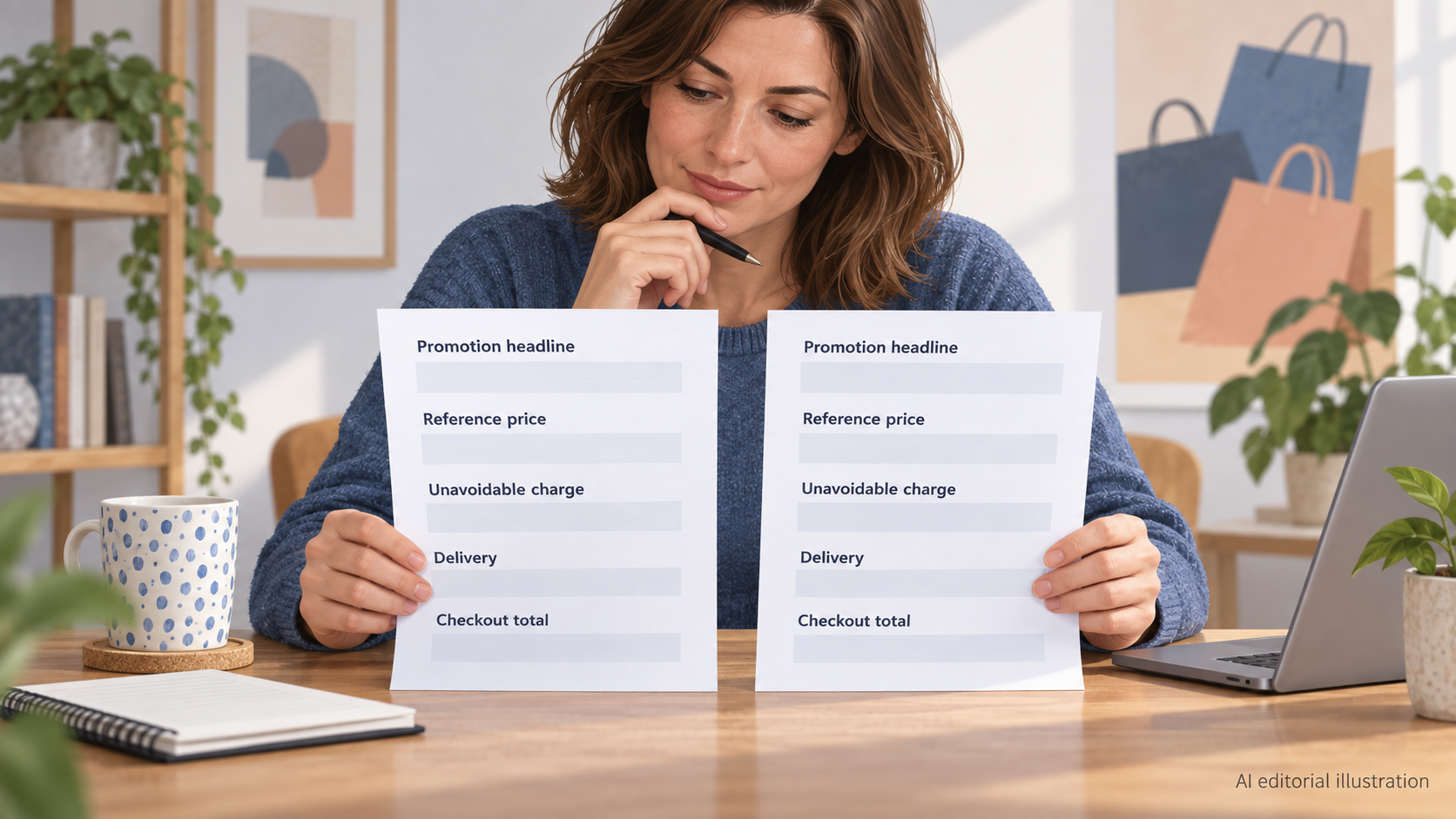
- The advertised offer: note the percentage, sale price, reference price if one is shown, and any stated conditions such as membership, minimum spend or selected items.
- The product-page price: check that the item you intend to buy is covered and that the displayed price has not changed when a size, colour or variant is selected.
- The unavoidable extras: add delivery or other compulsory charges that apply to the order. If a charge can be avoided by choosing a genuinely available option, separate it from charges every shopper must pay.
- The checkout total: use the final payable amount as the figure for comparison. Keep a short note or screenshot of the price and conditions if the promotion is time-limited.
A percentage can look impressive while the actual comparison remains incomplete. The meaningful question is not only how much the headline says you might save, but what the complete order costs under the conditions you would use. If the advertised figure excludes a charge that will necessarily be added later, it is not yet a complete basis for comparison.
The CMA summary also warns that hiding additional fees, taxes or other charges until later in the purchase process can be illegal. That is a general price-transparency warning, not a finding that a particular retailer or promotion has broken the law. For a reader assessing an offer, it is a reason to follow the price through to checkout and to pause when a compulsory amount only appears at the end.
Do not turn an unclear total into a confident saving. Write down the current payable price first; only then compare it with other products and with the use you have in mind.
Make the comparison meaningful
AI-generated generic editorial illustration — not a retailer product photo and does not depict the reviewed product or service. Compare a discount headline with the complete current cost and a like-for-like alternative, showing how unavoidable charges and checkout totals affect the comparison without implying that a specific promotion is a genuine deal.
A discount label is a prompt to investigate, not proof that the item offers better value. The fairest comparison point depends on the garment and the purpose it is meant to serve. Start by asking whether you are comparing the same product, the closest available alternative, or two items that only look similar in a promotion grid.
For the same item, record the complete current price and the conditions attached to it. For an alternative, compare the details that could change the decision:
- fibre composition and any stated material blend;
- construction details, lining, fastenings or other documented features;
- fit information, measurements and fit notes;
- care instructions and the maintenance they require;
- what is included in the purchase and how it will be delivered; and
- the occasions, frequency and setting in which you expect to use it.
Keep documented facts separate from assumptions. A product page may state a fibre composition or give a fit note; it does not automatically establish how long the garment will last, how comfortable it will feel to every wearer, or whether it will suit your routine. Those are questions to test against the available information and your own use, not conclusions to borrow from the promotion language.
A simple comparison record can use three columns:
| Check | Record | Do not assume |
|---|---|---|
| Price | Complete payable amount and compulsory charges | That the percentage-off figure is the final saving |
| Specification | Stated composition, construction and included features | That a label alone proves quality or longevity |
| Fit and care | Measurements, fit notes and care instructions | That a familiar size or fabric name guarantees a good fit |
| Use | Planned occasions and realistic frequency | That a low price compensates for little actual use |
This approach also prevents a crossed-out reference price from doing all the persuasive work. The reference figure may be part of the offer, but the decision still needs a current, complete price and a comparable product basis. There is no universal saving percentage at which a deal becomes genuine. The comparison is meaningful when the alternatives are described on terms that matter for the intended use and the price is complete for the route you would actually choose.
If you cannot explain why the promoted garment is the better fit for the stated need, keep it as an unverified option rather than calling it a bargain.
Read the return conditions before buying
AI-generated generic editorial illustration — not a retailer product photo and does not depict the reviewed product or service. Show a practical return-policy check from available return methods and barcode creation through refund processing and tracking, while reminding readers to verify the current policy for the specific retailer and item.
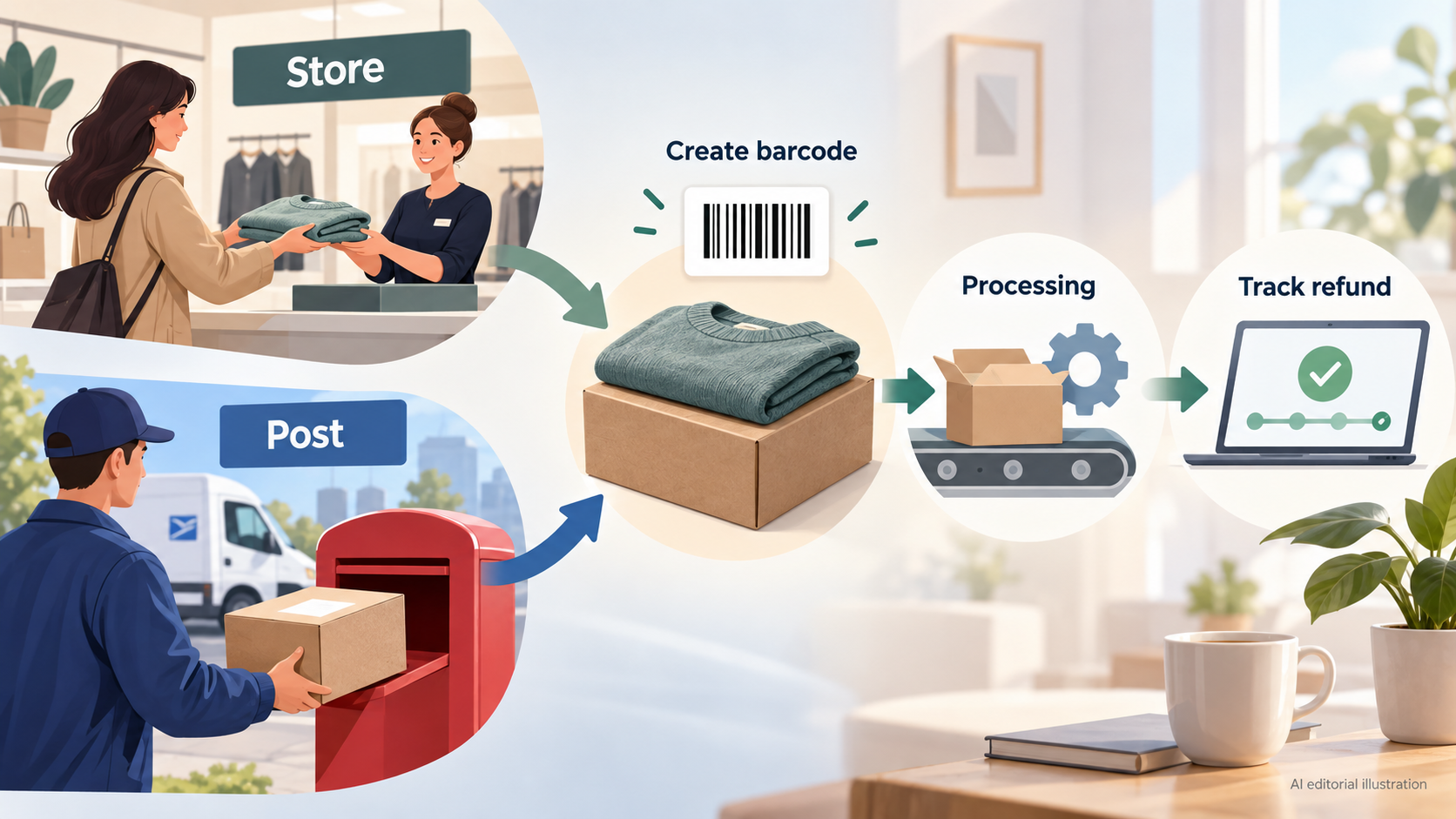 Returnability is part of practical value. A promotion is less useful if the route for sending an unsuitable item back is unclear, costly or difficult to complete. Before checkout, verify the policy for the exact retailer and item rather than assuming that a return arrangement seen elsewhere applies across the UK market.
Check five points:
- Time: how long the retailer gives you to start or complete a return, and whether the item has any special deadline.
- Route: whether returns can be made in store, by post or through a named drop-off service.
- Cost: whether each route is free, paid or dependent on the order or item.
- Conditions: whether exclusions, proof of purchase, an account or another requirement could affect acceptance.
- Refund process: how the retailer says the return is processed, how the refund can be followed, and where the current policy explains timing.
The M&S returns and refunds page provides a concrete example of the kind of workflow to document. It says the quickest way to return an item is through one of its Fashion, Home & Beauty stores, while a free return by post is also available. It directs shoppers to sign in to make a return or check its status.
The page describes an account-based process: open Orders & returns, find the order, select Return item(s), review how many days remain and give a reason, then choose the preferred method. After a return barcode is created, the item can be sent back through the selected route. The page also says shoppers can track the returned item’s journey and find out when to expect a refund from the M&S account. Those details are useful because they turn a general return promise into a series of actions to confirm before buying.
The same page says that for Evri or Royal Mail returns, an alternative drop-off point can be used even if it was not the one selected during the return request, without informing M&S of the change. Treat that as an M&S-specific term, not a general rule for other retailers. Policies, item exclusions and available routes can differ, so reopen the retailer’s current page for the exact order.
Do not invent a refund timeframe from a headline or from another purchase. If the policy page does not make the route or timing clear enough for your decision, put the promotion on hold until you can verify it.
Check fabric information and realistic use
Price and return checks protect the transaction; the garment information helps you decide whether the purchase belongs in your wardrobe at all. This step should stay grounded in what the retailer documents and in what you can realistically do with the item. It is a verification exercise, not a claim about performance.
Work through the product information in order:
- Fibre composition: record the stated fibres and blend information. Use the label as a description of what is documented, not as a shortcut to a quality or comfort conclusion.
- Construction: note the features that are actually described, such as the structure, lining, fastenings, pockets or other details relevant to how you expect to wear the item. Do not fill in missing construction information from photographs alone.
- Fit: read the available size guidance, garment measurements, fit description and model notes. Compare them with the measurements and silhouettes you know work for you, while recognising that a familiar size is not a guarantee of the same fit across garments.
- Care: read the care instructions before buying. Ask whether the required washing, drying, pressing or other maintenance fits your routine, space and willingness to look after the item.
- Use: name the occasions for which you would wear it, how often those occasions occur, and what you would pair it with. Include practical constraints such as layering, commute, weather or a dress code only where they genuinely apply to your plans.
- Wardrobe gap: identify the problem the item solves. It might replace a worn garment, cover a specific occasion or work with several pieces already owned. If you cannot name a credible use, the discount is doing more work than the wardrobe need.
Separate what is documented from what you hope will be true. A fabric name does not by itself prove durability, warmth, breathability or ease of care. A model image does not prove that the cut will work for your body. A low price does not remove the time and maintenance cost of owning something that stays unworn.
A useful final question is whether the item still makes sense after removing the promotion language. Could you explain the intended use, the fit information you relied on, the care routine and the likely frequency of wear in plain terms? If yes, the offer has passed a meaningful personal-use check. If not, record the missing information and pause instead of treating the item as a confirmed deal.
Turn the checks into a practical buying decision
Before checkout, make a short record for the exact item:
- Total current cost: final price, delivery and compulsory extras.
- Comparison basis: same product or closest alternative, with the relevant specification and use differences noted.
- Return route: deadline, method, cost, exclusions, proof or account requirements, and refund tracking.
- Product documentation: fibre composition, construction, fit information and care instructions.
- Planned use: the occasions, likely frequency and wardrobe gap the item is meant to address.
Use a neutral hold rule: if one of these checks remains unclear, do not upgrade the promotion into a genuine-deal verdict. Verify the missing detail, choose a better-documented alternative, or leave the item for later. If the total price is clear, the comparison is like for like, the return route is workable and the garment fits a real use, you have a defensible basis for deciding. That basis comes from the evidence available for the item and retailer, not from the promotion label by itself.
Primary action: use this pre-check record before you buy.
Frequently Asked Questions
How do I check the total price of a fashion promotion?
Follow the offer from the advert to the product page and then to checkout. Record the sale price, any conditions, delivery and every compulsory charge, and use the final payable amount for comparison. The CMA summary says traders should provide clear, complete and accurate total prices up front, including charges consumers cannot avoid. If a compulsory amount appears only later, pause and investigate rather than treating the headline percentage as the saving.
What return details can change whether a discount is worthwhile?
Check the return window, available methods, cost, exclusions, proof or account requirements, and how the refund is processed and tracked. The M&S example shows why the route matters: its page describes store and free postal options, a return-barcode workflow and account tracking. Apply those details only to M&S and recheck the current policy for the retailer and item you are considering.
Can a low price make a garment a genuine deal if I will rarely wear it?
Not by itself. A low price can still represent poor practical value when the garment does not fill a wardrobe gap, fit the occasions you actually have, or suit the care routine you can maintain. Note the likely frequency of wear and the specific use before deciding; if the use is vague, keep the promotion on hold.
How should I use fabric and care information when comparing garments?
Treat the product information as a set of checks. Record the stated fibre composition, construction, fit details and care instructions, then compare them with the occasions, frequency and maintenance you realistically expect. Do not infer durability, comfort or other performance outcomes from a fibre name or photograph alone. The aim is to make a documented, use-based comparison rather than to create a product verdict from incomplete information.
Related reading
- Best UK high-street brands for wardrobe essentials: evidence-led top choices
- Marks & Spencer vs Uniqlo: which is better for everyday wardrobe basics?
- Marks & Spencer clothing review: strengths, limits and practical alternatives
- Uniqlo UK clothing review: who it suits and where the trade-offs sit
Editorial information: About our editorial team · Read our editorial policy · Read our affiliate disclosure.