

How to judge value before buying clothes
A clothing purchase can be good value without being the cheapest item on the page, and a sale item can still be poor value if it does not solve a real wardrobe problem. Judge it across five questions: do you need it, what is the complete price, how often will you wear it, can you live with its care routine, and what happens if the fit or suitability is wrong?
Use the product's documented specifications, fit information and care details alongside the retailer's delivery and return terms. This is guidance based on those records; it does not claim hands-on testing. The goal is to make a calmer decision before checkout, including whether the right time is now, later in the season or not at all.
For the price part, UK guidance says traders should provide total prices up front and not hide unavoidable charges until later. For distance purchases, GOV.UK explains the cancellation and refund sequence that can apply to online, mail and telephone orders. Those rules do not tell you whether a garment suits your wardrobe, but they give you two useful guardrails: compare like for like, and understand the exit route before committing.
Value is therefore a decision under uncertainty, not a reaction to a countdown clock. Start with the information that can be checked, make a realistic estimate of use, and let an incomplete answer move the decision to “wait”. A purchase is ready to consider only when the practical upside is clear enough to outweigh the effort and risk of getting it wrong.
Start with need, not the sale
Ask what job the item will do. Is it replacing something worn out, filling a genuine gap, or covering a specific occasion? Then check the clothes you already own. A similar colour, shape or function may mean the new piece will compete with items already in rotation rather than add useful choice.
Timing matters too. If you need an item for a defined season or event, set a date by which it must be ready. If the use is vague — “it is a good deal” or “I might wear it someday” — treat that as a reason to pause. The promotion is not the wardrobe need.
Write a one-line use case before you buy: “I need a layer for weekday commuting in cooler weather” or “I need shoes for an upcoming formal event.” Keep it specific enough to test against the listing. If the specifications or fit notes do not support that use, the discount does not fill the gap.
Check frequency, too. An item for one known occasion can still be worthwhile, but its complete price should make sense for that limited role. Conversely, an everyday basic earns its place only if it works with the clothes and routine you actually have, not an imagined future wardrobe.
A useful first decision is simple: if the item duplicates what you own, pause and revisit the use case. If the need remains clear, continue to price and risk checks; if it fades, skip the purchase.
Compare the complete price
AI-generated generic editorial illustration — not a retailer product photo and does not depict the reviewed product or service. Illustration supporting this section.
Do not compare only the number beside the product image. Work out the amount you would actually have to pay for the chosen order route, then compare that amount with alternatives on the same basis. Include any unavoidable delivery charge, service fee, tax or other charge. If a charge must be paid, it belongs in the value calculation even if it appears later in the checkout.
This is consistent with GOV.UK's summary of CMA price-transparency guidance: prices should be clear, complete and accurate; traders should provide total prices up front; and additional fees, taxes or other unavoidable charges should not be hidden until later in the purchase process. The practical lesson is to treat the headline price as provisional until the mandatory parts of the total are visible.
Make the comparison like for like. Check whether each retailer's figure includes delivery, whether the same delivery option is being compared, and whether a service or processing charge is mandatory. Keep optional extras separate: an express upgrade you choose is different from a charge you cannot avoid. The figure that matters is the complete payable amount for the option you would select.
Then ask whether the saving is real. A lower headline figure is not a meaningful saving if the mandatory charges erase the difference or are disclosed only after you have invested time in checkout. Record the item price and complete total for each serious option. This takes the emotion out of the comparison and makes it easier to stop when the final amount no longer fits your budget or expected use.
Estimate likely wear
Next, estimate how the item will be used, not how attractive it looks in the product image. Think through the occasions, weather, season and combinations that match your real week. A garment with several plausible uses may be more practical for you than one reserved for a single scenario, but only if those uses are genuinely likely.
A simple way to test the price is to estimate likely wears over the period you expect to keep using the item, then consider the complete price against that use. This is not a promise about durability or a precise financial calculation. It is a check against buying something that feels inexpensive at checkout but will spend most of its time unworn.
Use the documented specifications and fit information to make the estimate more honest. Does the listed shape suit the clothes you pair it with? Is the size guidance clear enough for your body and intended layering? Does the construction or feature set match the job you identified? If those answers are uncertain, lower your expected-wear estimate rather than filling the gap with optimism.
Also account for friction. A piece that requires a special outfit, a narrow weather window or an awkward styling decision may be worn less often, even when it looks versatile in theory. If the item works only under conditions you rarely meet, waiting for better information or declining it may create more practical value than buying at a reduced price.
Factor in care and maintenance
Read the care information before treating the ticket price as the full commitment. Note the stated washing, drying, ironing, cleaning and storage instructions, then compare them with what you actually do. The question is not whether a care routine sounds premium; it is whether you can follow it consistently without making the garment a burden.
Care affects value in two ways. It can add effort to every wear, and it can make the item less available when your preferred cleaning method or drying space is not possible. If the garment needs a routine you already know you will avoid, its likely-wear estimate should fall. That may change the decision even when the purchase price looks attractive.
Keep the assessment tied to documented care details. Do not assume that a fabric, finish or construction will be more durable, softer or easier to maintain unless the listing or care information actually supports that description. This guide uses records rather than hands-on testing, so it cannot turn a specification into a guarantee about long-term performance.
Before checkout, translate the care note into a practical question: “Will I still choose this item on a busy week?” If yes, continue. If no, either find a better-matched option or wait until the item can be assessed with clearer care information. Lower maintenance is not automatically better; the better choice is the one whose requirements fit your routine and expected use.
Check return conditions before committing
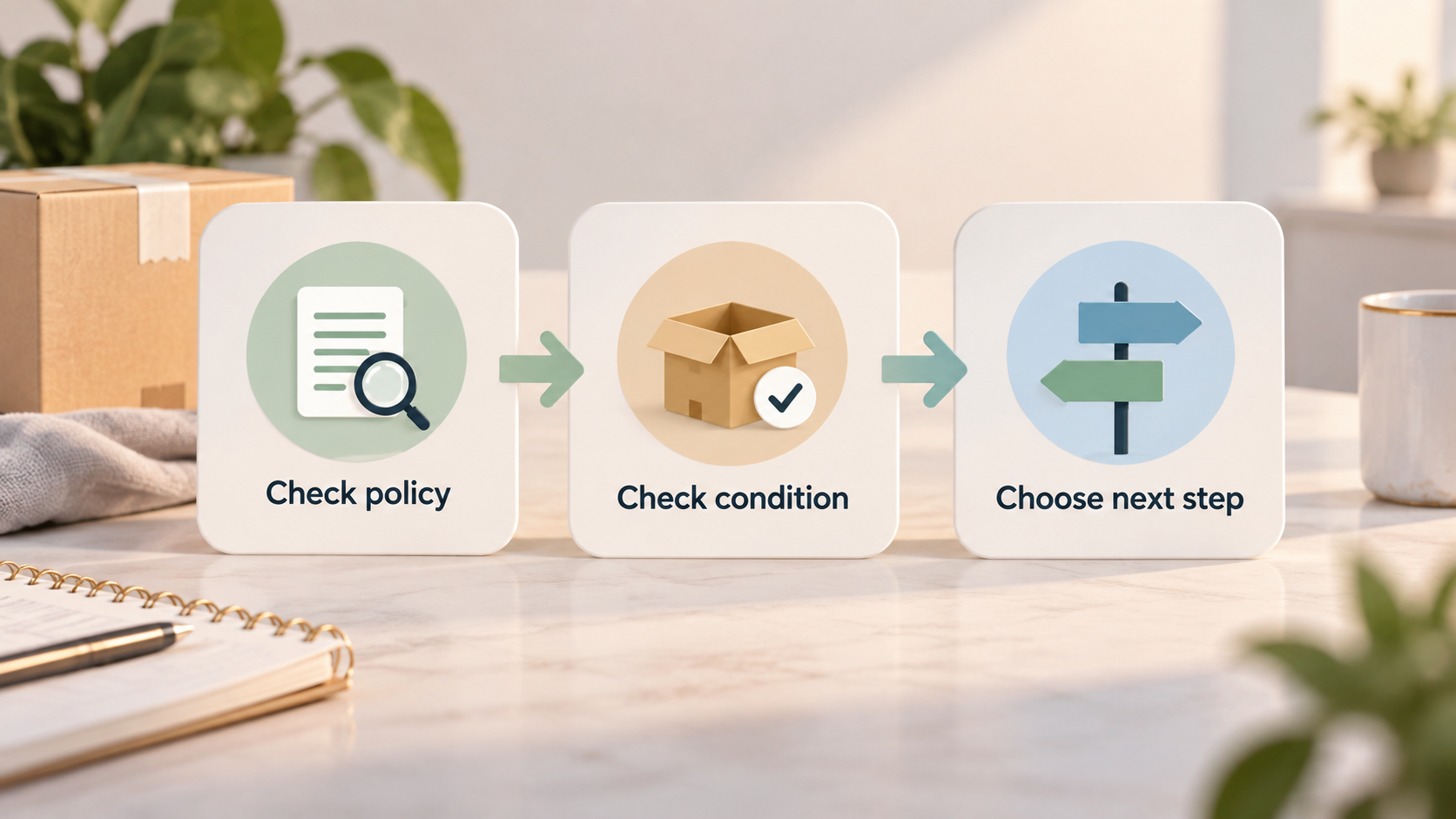 Fit uncertainty is part of the value decision whenever you buy online, by mail or by phone. Before paying, find the retailer's terms for cancellation, returns, refunds, exclusions, condition and delivery costs. A low price is less useful if the route for correcting a wrong size or unsuitable item is unclear or too restrictive for your level of uncertainty.
For many distance purchases, GOV.UK says customers can cancel within a limited period even when the item is not faulty. The sequence described is:
- Tell the seller within 14 days of receiving the item that you want to cancel.
- Return the item within the following 14 days.
- The seller refunds within 14 days of receiving it back.
The customer does not have to give a reason. The seller cannot deduct fees from the refund unless the item has been used or damaged. Customers may handle an item as they would in a shop, including trying it on or taking it out of its packaging to see it, but condition still matters.
Where that distance-selling cancellation right applies, standard delivery must also be refunded. If you paid more for an expensive delivery option, the seller only needs to refund the standard delivery cost. This makes the delivery line part of the return-risk calculation, not just the initial price comparison.
The sequence is not a promise that every clothing purchase has identical treatment. The GOV.UK guidance also identifies situations where a refund does not have to be offered except for a faulty item, so check the retailer's current terms and the relevant official guidance for exceptions. Look for the deadline, the address or process for notifying the seller, any item-condition rules, and whether the product is within an exception.
A practical fit check before ordering is to compare your measurements with the retailer's size chart and read any fit notes. If the information is thin, treat the uncertainty as a cost: you may spend time arranging a return, wait for a refund, or find that an exception changes the route available. That does not make the purchase wrong, but it means the complete price and likely wear need to be strong enough to justify the risk.
Use a simple buy, wait or skip decision
Bring the checks together just before checkout. Buy when:
- the item fills a specific need or replaces something you will use;
- the complete payable price is clear and acceptable;
- the likely wear is realistic for your season, occasions and wardrobe;
- the documented care routine fits your life; and
- the fit information and return conditions give you a manageable way to correct a mistake.
Wait when one answer is missing but can be checked. For example, pause if the total has not yet shown mandatory charges, the fit notes are too vague, the care instructions are incomplete or the return process is difficult to find. Waiting keeps an incomplete decision from being turned into a purchase.
Skip when the item duplicates clothing you already have, has no clear use case, is unlikely to be worn, or demands care you will not maintain. Also skip when the return route is too restrictive for the uncertainty you still have. A sale can improve value only when the item remains useful at its complete price and the associated fit and return risks are manageable.
Use a short note or checklist so the decision is repeatable. Record the need, final total, expected occasions, care burden and return deadline. The record does not need to be elaborate; its purpose is to make the decision answer-oriented rather than promotion-led. If you cannot explain why you will wear the item and how you would exit if it is wrong, “wait” is a sound result.
Frequently Asked Questions
Is a sale price automatically better value for clothing?
No. A sale changes the ticket price, not the need, likely wear, care burden or fit risk. Compare the complete payable amount with the realistic use you expect. If the item is a duplicate, the care routine does not suit you or the return route is too uncertain, a discount does not by itself make it good value. Treat the sale as one input to the decision, not the decision rule.
What is the UK online clothing return and cancellation window?
For online, mail or telephone orders, GOV.UK says the customer generally has to tell the seller within 14 days of receiving the item, then has another 14 days to return it. The seller must refund within 14 days of receiving the returned item. No reason is required, but exceptions and item-condition rules can apply. Where the cancellation right applies, standard delivery is refunded; a premium delivery upgrade does not have to be refunded above the standard cost. Check the retailer's current terms for the specific order.
Which charges should be included when comparing clothing prices?
Compare the total payable amount for the order route you would choose. Include unavoidable delivery, service, tax and other mandatory charges, and keep optional upgrades separate. UK price-transparency guidance says traders should provide total prices up front and not hide unavoidable charges until later. If the final total is not clear, you do not yet have a like-for-like basis for calling the item a saving.
How should care requirements affect a clothing purchase decision?
Treat the documented care instructions as part of the item's practical cost. Check washing, drying, ironing, cleaning and storage requirements against your real routine, then lower the likely-wear estimate if the care burden is likely to stop you using the garment. Do not infer durability or easy maintenance from a material label alone. The right choice is the one whose care demands fit your routine and expected use.
Related reading
- Best UK high-street brands for wardrobe essentials: evidence-led top choices
- Marks & Spencer vs Uniqlo: which is better for everyday wardrobe basics?
- Marks & Spencer clothing review: strengths, limits and practical alternatives
- Uniqlo UK clothing review: who it suits and where the trade-offs sit
Editorial information: About our editorial team · Read our editorial policy · Read our affiliate disclosure.