
A practical, evidence-bounded framework for checking measurements, fit, movement, fabric feel, care effort, value and retailer terms before deciding whether to keep a clothing or footwear purchase.
The Practical Keep or Return Question
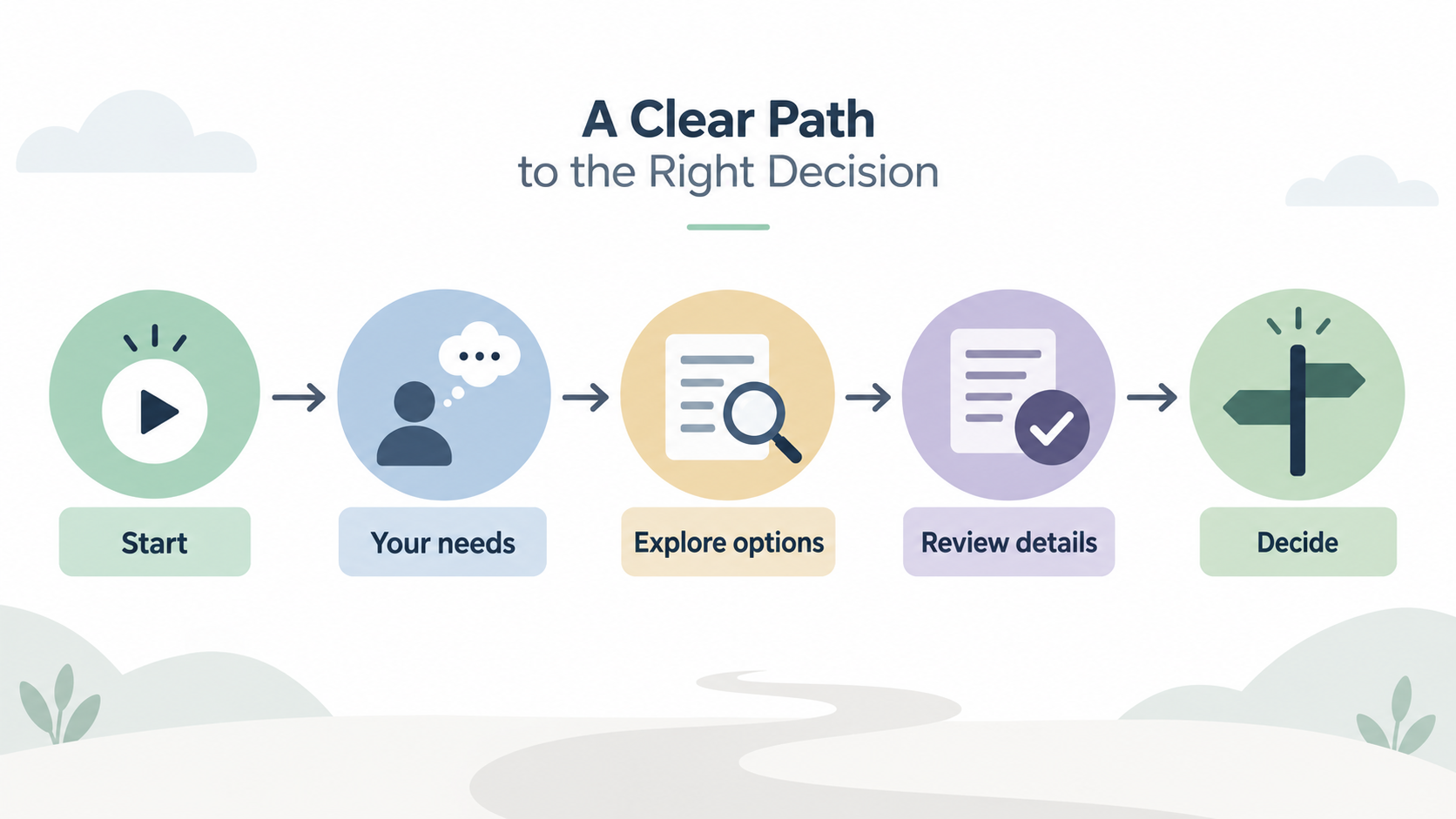
Keeping an item is not a verdict on whether it is “good” in the abstract. It is a decision about whether this particular purchase has enough documented information, acceptable personal observations and workable terms for the way you expect to use it. A smart check therefore moves in stages: start with the retailer’s measurements and product information, assess fit and movement, notice fabric feel and construction, then weigh care, value and return conditions.
The question is practical: can you use, maintain and return the item on acceptable terms?
The evidence boundary matters. Official size and care pages can document what a retailer publishes; they cannot, by themselves, establish how a garment feels on your body, how it will perform through repeated wear, whether the price represents value for you or what a current return outcome will be. Treat personal impressions as observations, not universal rules. If a key question remains unanswered, pause the keep decision and seek the missing product or retailer information while the relevant deadline is still open.
Start With Documented Measurements and Product Information
AI-generated generic editorial illustration — not a retailer product photo and does not depict the reviewed product or service. Provide a neutral visual comparison that supports the reader's decision without depicting a real product.
Before first impressions take over, open the retailer’s relevant size-guide and product-information pages. Marks & Spencer’s official size-guide page presents a category selector including Women, Lingerie, Men, Children, Boys and Girls. That structure is a reminder to choose the closest category rather than applying one generic chart to every purchase.
Create a short record for each item:
- the selected category, size label and product identifier;
- body measurements used by the guide, with the date and measuring method;
- garment measurements or fit notes if the retailer provides them;
- the stated fit description, material composition, stretch or opacity information where shown;
- fastening, pocket, lining and care details that could affect use;
- the page URL and the date checked.
Keep body measurements, garment measurements, fit labels, material details and care instructions in separate fields. “My waist measurement matches” is not the same evidence as “the garment has the ease I want”; “machine washable” is not the same as “low effort for my routine.” Recording the retailer’s wording preserves the baseline you can compare with your own observations later.
If you are between sizes, do not silently convert the chart into a promise that either size will work. Note which measurement drives the choice, what the intended silhouette is, and whether the larger or smaller option would create a specific trade-off. For footwear, record the size system, width information and any product-specific fit wording shown on the page. The aim is not to produce a perfect prediction; it is to make the decision traceable.
Check Fit and Ease of Movement
Use the documented inputs to inspect the areas that matter for intended use, rather than asking only whether the item looks acceptable while standing still. With clothing, check the main points of coverage and balance: shoulder or waistband position, bust or hip room where relevant, sleeve and hem placement, rise, and whether closures sit without pulling. Observe whether fabric gaps, rides up, twists, bunches or leaves excess volume. These are observations about this item on this body and for this use; they are not universal pass-or-fail rules.
Then rehearse ordinary actions in a safe, private setting: sit, reach, walk, bend, raise the arms, turn and layer over or under the garment if that is how you will wear it. Notice restriction, exposure, pressure points and whether the item returns to a workable position. A fit that looks fine for a photograph may not suit a commute, desk day, school run, travel day or repeated bending. Write the action beside the observation: “rises when seated,” “sleeve restricts reach,” or “comfortable with a thin layer.” That keeps the conclusion tied to a foreseeable situation.
Treat footwear as a separate movement check. Walk at normal pace, pause, turn and use the kind of surface and socks you expect, where the retailer’s conditions allow. Note heel movement, toe pressure, rubbing, flex point, stability and whether the fastening stays secure. Do not use a short indoor impression to claim durability or performance in conditions you have not assessed.
If the item only works with constant adjustment, a different layer or an unlikely posture, mark that as a practical cost. If the concern is minor and the intended use does not expose it, record the limitation rather than forcing a dramatic verdict.
Assess Fabric Feel and Everyday Function
Once fit is acceptable, assess feel and function as a set of observations. Handle or wear the item only within the retailer’s stated conditions and notice weight, drape, stretch, opacity, seam feel, fastenings, pocket access and how easy it is to put on, remove or adjust. Ask what those observations mean in context: warm or cool weather, long sitting, walking, commuting, carrying a phone or keys, or coordinating the item with the rest of the wardrobe.
UNIQLO’s official product-care page shows why care information belongs in this assessment. It provides separate guides for denim, Ultra Light Down, Extra Fine Merino, cashmere, PUFFERTECH, outerwear, kid’s padded jackets and linen, as well as guidance on storing clothing. Use the relevant care topic as a prompt to inspect the item’s maintenance expectations, not as proof of how it feels or how long it will last.
Make a simple function note: what the item needs to do, what you observed, and what remains unknown. For example, a coat may have useful pockets but still be awkward over the layers you plan to wear; a jumper may have a comfortable hand feel but require a care routine you will not follow; a shoe may look balanced but feel restrictive when you walk. These are not retailer-wide conclusions. They are your observations against your own routine.
Separate sensory impressions from documented details. “Feels soft to me” and “the care page gives a hand-wash instruction” answer different questions. Keeping both notes prevents an appealing first impression from hiding a maintenance or access problem.
Weigh Care Burden Value and Retailer Terms
Care becomes part of value when it repeats. The UNIQLO page states that washing, maintaining and storing clothing correctly can help you enjoy it for longer, and its named care guides show that different garment groups may need different maintenance prompts. Translate the instructions into your routine: how often the item is likely to need attention, whether hand washing or special drying is involved, whether you have the space or equipment, and whether storage needs are realistic. Do not call a garment “easy-care” unless the actual instructions and your routine support that description.
Then test the value assumption. Start with the price you paid or expect to pay, but do not let a low price erase a poor fit or a high price guarantee usefulness. Estimate likely wears only as a transparent assumption: expected occasions, season, outfit compatibility and replacement risk. If the result depends on optimistic use, write that down. A cost-per-wear estimate is a planning tool, not proof that the item will be durable or economical.
Finally, check retailer terms while they are current. Confirm the return or exchange deadline, condition requirements, exclusions, proof of purchase, delivery or collection arrangements and any difference between online and store processes. A size guide and care page do not establish a current returns outcome, so do not infer one from a product description or from a previous order. Save the relevant terms and the date checked.
A keep decision is stronger when it names the trade-off: “good fit, moderate care effort, useful for two regular outfits, return window confirmed.” A return or pause decision can be equally specific: “movement restriction unresolved,” “care task incompatible with weekly routine” or “value depends on occasions I am unlikely to use.” This makes the choice proportionate to the evidence rather than to excitement, sunk cost or fear of missing out.
Use a Repeatable Keep or Return Sequence
Use the same sequence for every item so that a strong first impression does not skip a weak point:
- Document. Save the relevant category, measurements, fit wording, product details, care information and retailer terms.
- Fit. Check the intended body area, coverage, balance and the measurements that drove the size choice.
- Move. Sit, reach, walk, bend, layer and, for footwear, walk and turn in the expected conditions.
- Feel and function. Record hand feel, weight, drape, stretch, opacity, seams, fastenings, pockets and access.
- Maintain. Translate washing, drying and storage instructions into recurring time, equipment and storage needs.
- Value. Write down price, realistic use, outfit compatibility and the assumptions behind any cost-per-wear estimate.
- Decide. Keep, return or pause, and state the evidence and observation that made the decision.
A compact note can use four columns: “documented fact,” “my observation,” “unknown or question” and “decision.” Add the product identifier and the date checked. This is enough to distinguish a retailer statement from a personal reaction and from a missing answer.
Pause rather than forcing a verdict when a key measurement is unavailable, movement has not been assessed, care instructions are unclear, or the return deadline and conditions have not been checked. Seek the missing information from the relevant retailer page or customer service, and keep the item in a condition that preserves your available options. The framework is useful because it makes uncertainty visible; it is not a scoring system that can promise a perfect purchase.
Frequently Asked Questions
How should I use a retailer size guide when my measurements fall between sizes?
Use the category that matches the item, record the measurements the retailer asks for, and note which measurement controls your choice. If you sit between sizes, compare the likely trade-offs in coverage, ease and intended silhouette. Do not treat the chart alone as proof of comfort; confirm the result with movement and layering observations where the retailer’s conditions allow.
What movement checks help reveal that clothing or footwear will not work for its intended use?
Try ordinary actions connected to the intended use: sitting, reaching, walking, bending, turning and layering. Look for restriction, gaping, riding up, pressure, excess volume or repeated adjustment. For footwear, walk, turn and notice toe pressure, heel movement, rubbing and fastening security. Record the context; an observation is not a universal pass-or-fail rule.
How can I estimate care burden before deciding to keep a garment?
Read the care instructions before removing tags and translate them into recurring work: washing method, drying, ironing or steaming, storage, equipment, space and time. Compare that routine with how often you expect to wear the item. An official care guide can document maintenance instructions, but it does not prove the garment will feel a certain way or remain durable for your use.
What retailer return details should I confirm before removing tags or wearing an item outside?
Confirm the current return or exchange deadline, condition rules, exclusions, proof-of-purchase requirements and online or store process. Save the page and date checked. Do this before removing tags or wearing the item outside. A size or care page does not itself confirm the outcome of a particular return, so treat retailer terms as a separate, time-sensitive check.
Related reading
- Best UK high-street brands for wardrobe essentials: evidence-led top choices
- Marks & Spencer vs Uniqlo: which is better for everyday wardrobe basics?
- Marks & Spencer clothing review: strengths, limits and practical alternatives
- Uniqlo UK clothing review: who it suits and where the trade-offs sit
Editorial information: About our editorial team · Read our editorial policy · Read our affiliate disclosure.